Before You Buy an EV Charger, Talk to Your Panel
The load calculation on your panel decides your EV charging setup long before the charger brand does.
September 8, 2026 · 3 min read
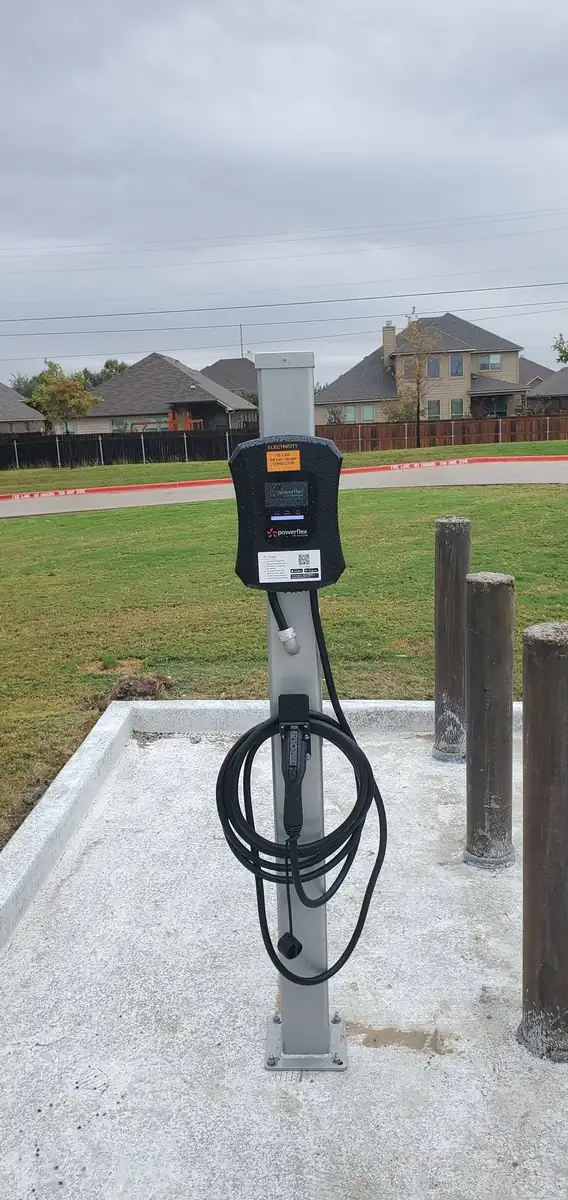
Most people shopping for a home EV charger start with the charger. They compare charging speeds, read reviews, pick a brand, and then call an electrician to "just install it." It's understandable, that's the part you can actually shop for online. It's also backwards, because the charger is the easiest part of this decision. The panel underneath your house is the part that actually determines what's possible.
What the panel has to prove before anything else
A Level 2 home charger pulls a serious, continuous load, often in the range of 30 to 50 amps for hours at a stretch while a car charges overnight. That's very different from a load that spikes briefly and drops, like a microwave or a hair dryer. Before we ever talk about where the charger goes or which wall it mounts on, we run a load calculation on the panel: what's already on it, how much of that runs at the same time realistically, and how much headroom is left for a new continuous 240 volt circuit.
Sometimes there's plenty of room and the job is genuinely simple: a dedicated circuit, a breaker sized to the charger, and a run of wire to the mounting point. Other times the panel is already close to its limit, especially in older homes that have picked up a hot tub, a second AC unit, or an addition since the panel was installed. In that case, the honest answer isn't "we'll make it work," it's that the panel itself needs attention first, whether that's a panel upgrade or, in the right situation, a load management device that lets the charger and the rest of the house share capacity safely.
Why this matters more than the charger brand
A charger installed on a panel that's already maxed out doesn't fail dramatically. It fails quietly, the same way an overloaded panel always does: breakers that run warm, occasional nuisance trips, or a panel that's working harder than it should every single night. None of the charger's features change that. A great charger on an undersized panel is still a problem waiting for the right night to show up.
This is also where a lot of installs go sideways when they're rushed. A car dealership or a charger manufacturer isn't going to run a load calculation on your specific panel, because that's not their job. It's ours. Our team is EVO Charge certified, and we've installed everything from residential Level 2 chargers to a commercial PowerFlex charging station, so we've seen the full range of what a panel needs to handle a charger correctly, not just what a spec sheet says in theory.
What to expect from the visit
- A look at your existing panel, brand, age, and current breaker load, whether it's a Square D, GE, or Eaton panel or something older.
- An honest answer about whether the panel supports a new dedicated 240 volt circuit as-is, or needs an upgrade first.
- A recommendation on charger placement based on your garage or driveway layout and the shortest safe wire run, not just wherever looks convenient.
- A written estimate before any work starts, with no pressure to commit on the spot.
The parts people forget to ask about
A dedicated circuit for a charger needs its own breaker and its own run of wire, sized correctly for the amperage and the distance from the panel to the garage or driveway, since a run that's too long for its wire gauge loses voltage and runs hotter than it should. Outdoor or garage-adjacent outlets also need proper GFCI protection where the code calls for it, which is a detail that's easy to skip if the person doing the install is focused only on the charger itself. And once the circuit's in, the whole job gets pulled through the same permitting and inspection process as any other electrical work in the City of Austin, so what you end up with is documented and legitimate, not just functional until someone asks to see paperwork.
We serve homeowners and commercial properties across Austin and Williamson County, and we've been a licensed contractor here, TECL-24811, since 1987. Every install carries a one year material and labor warranty, and the estimate itself is free whether the answer turns out to be a simple circuit or a bigger panel conversation. If you're thinking about an EV charger, start with a call to us before you finalize the charger order. Visit our EV charging page, or call (512) 642-4417 and tell us what you're driving and where you park it. We'll tell you what your panel actually needs.
Lightning Electrical — (512) 642-4417
Call (512) 642-4417More articles
Your Insurance Company Sent a Letter About Your Panel. Here's What It Means.
If the letter names Federal Pacific or Zinsco, the insurer isn't guessing. Here's what they know that you might not.
A Breaker That Never Trips Isn't Good News
Lights that go out with no breaker flipped usually mean something is wrong upstream of the breaker, not downstream of it.